JoyMath · notes from the tide line

I stopped trying to fix the system from inside it.
So I built a tide pool instead.

For almost two decades I worked inside public education — teaching, learning, leading, coaching, serving on committees — trying to reform mathematics education from within. I learned the structure well enough to see why that work alone couldn't hold. You can't wield the ocean. So the work changed: not reform, but refuge. Not a patch on the old system, but a small, intentional habitat built outside it, where a more honest relationship with mathematics can actually live.

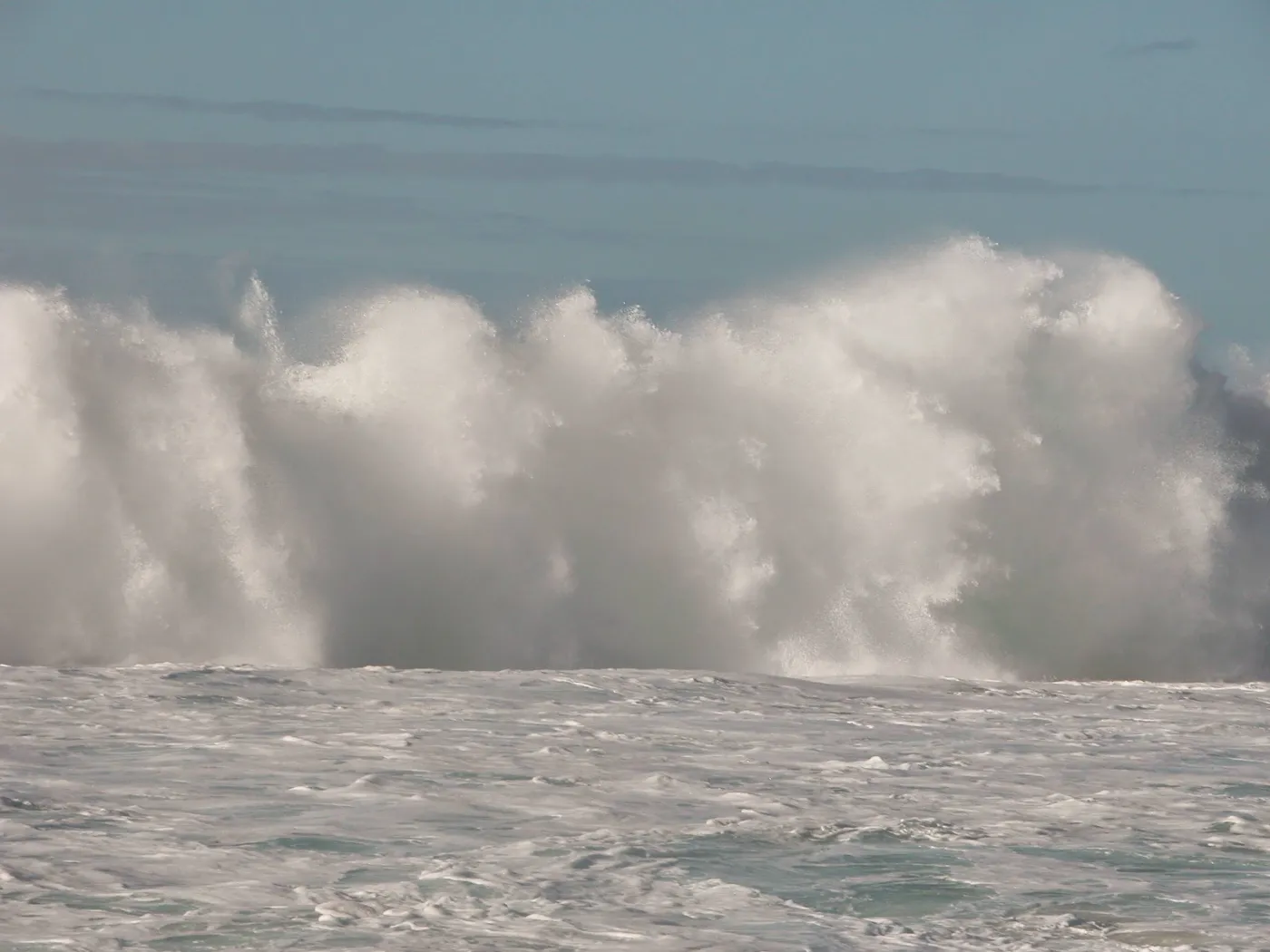
A massive wave breaking, white spray towering over churning sea
The shift

Good intentions, bolted onto an unchanged foundation, still depend on individual courage to survive.

I've watched many education systems reach, sincerely, for the right pieces — belonging, student agency, equity work. I believe the people doing that work mean it. But when a new piece is added onto a structure that was never taken apart and redesigned to hold it, the piece has nothing underneath it. It survives only as long as the particular humans holding it have the courage and the capacity to keep holding it. That's not a structure. That's a hope balanced on a person, and hope-dependent systems tend to break, because people get tired, reassigned and replaced.

So the work that actually needs to be done isn't inside the building — it's underneath it. I'd been working on the wrong solution because I hadn't asked the right question. The question was never “How do we fix the system?” It was “How could we design a structure with equity and belonging built into its foundation, instead of asking people to hold up the flags and decorations forever after?” Like any reasonable mathematician, I knew I needed to scale the problem down to something local-sized — there are far too many sharks swimming in that ocean, and far too many variables and relationships to model a complete functional structure at full scale. So I built a math habitat instead: a tide pool.
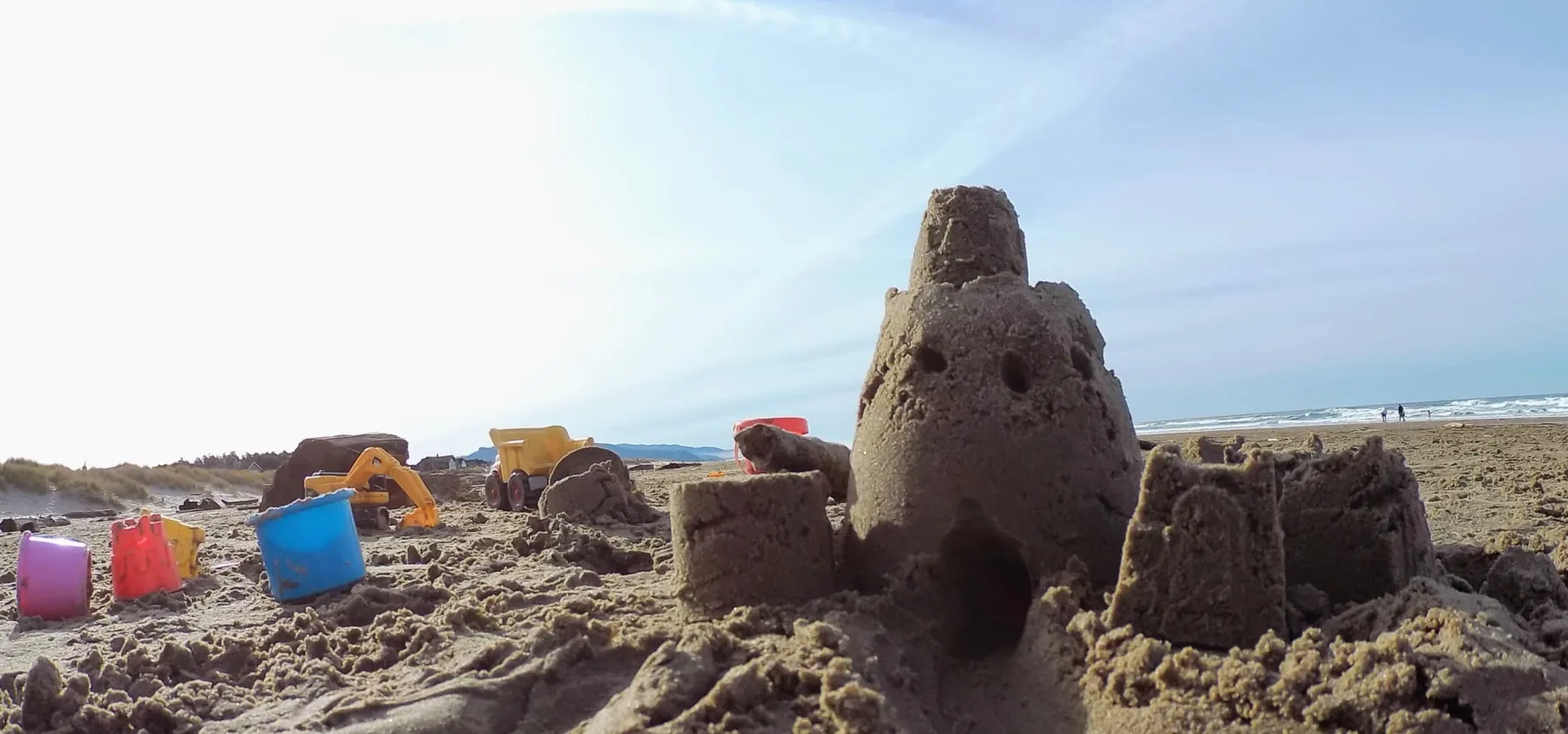
A hand-built sandcastle on a wide beach, buckets and toy trucks scattered nearby, the surf in the distance

A tide pool doesn't reform the ocean. It doesn't need to. It is part of the ocean, formed by it, and will return to it — but for the hours the tide is out, it holds its own weather. That's the scale JoyMath works at now.
What we're building now

Tidepool Pods

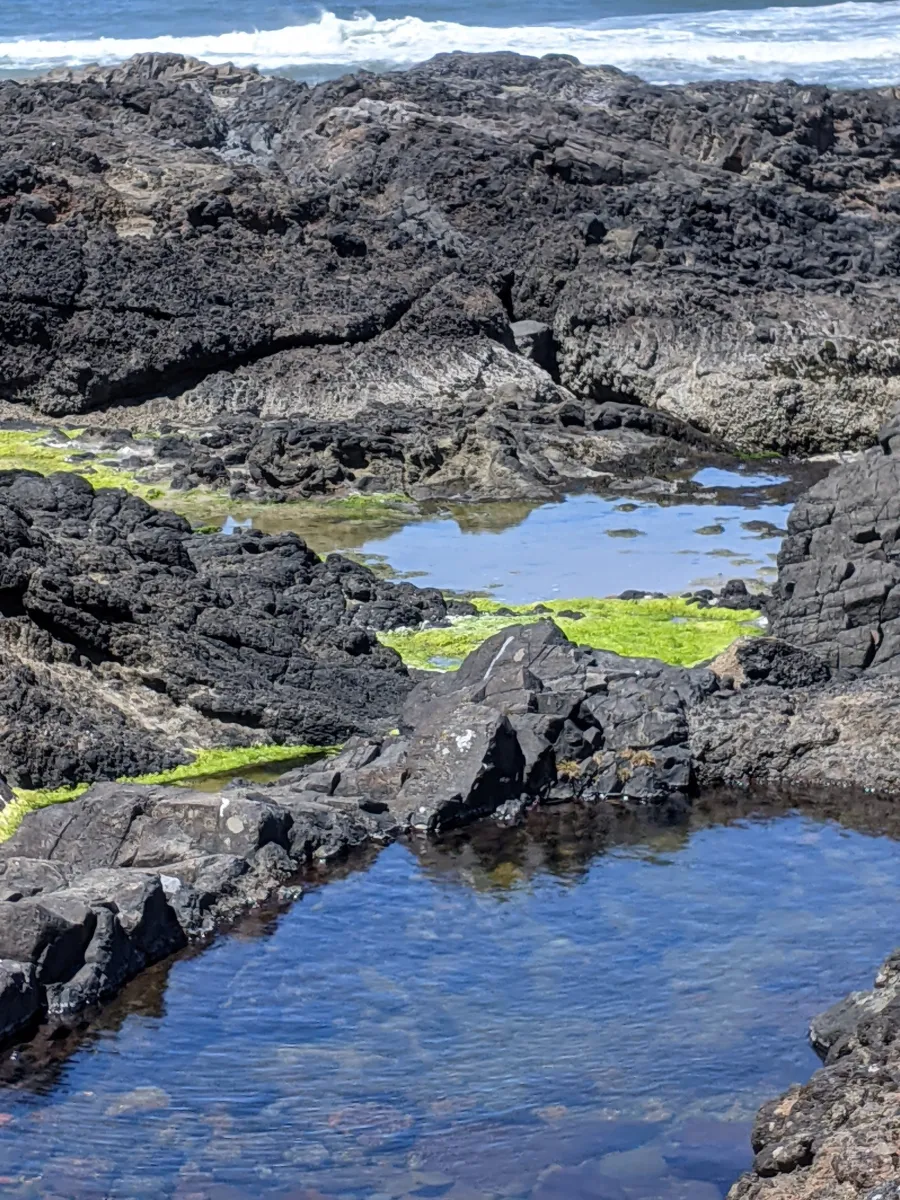
Still tide pools ringed by dark basalt and bright green algae, with surf breaking beyond the rocks

A Tidepool Pod is a small, intentional group, its own self-contained ecosystem. It comes from the wider world of mathematics, stays connected to it, and will eventually send its members back out into it. But while the pod is together, it holds its own conditions: its own pace, its own norms, its own refuge.

Anyone can start one by first shaping its constraints: how long it runs (a year-long learning circle or one Saturday at the park), how many roles it needs, who it's for, and what it's reaching toward — making something together, or an ongoing practice of learning. A pod can be open to everyone or built around a shared identity or need — whatever makes the water feel safe enough to enter. The constraint isn't about who is or isn't allowed; it's about what this particular pod needs to hold its people well. Because anyone can start a pod on their own terms, with no central gatekeeper handing out resources, equity isn't added afterward. It's built into who gets to form one.

Each pod holds itself up like a tensegrity structure: no one carries it all. Everyone wears one hat. Protocols carry the plan, so you can show up fully without preparing ahead. And if someone needs to step away, even the person who started it, the next person steps in and the pod keeps standing. Learn More →

Dipping in your toes
No big commitment needed. Join a single-day event. Try out different roles in a simulation with JoyBot. Flip through the protocol Rolodex. Plant your own idea to see who bites, or fully form your own ongoing pod with people you know.
Humans, first
Before any math happens, everyone shares a PIO — a Portable Identity Object: how I learn, what I need, what I bring.
Exploring the tide pool
The group uses existing protocols to notice, wonder, question, mathematize and revise together, building a record of real thinking, with the option to create your own Mathfolio.

Curious whether a Tidepool Pod is right for your family?

I'd rather talk it through with you than sell it to you. Reach out and tell me what you're noticing.

Start a conversation
How this has grown

A living map, re-versioned each season

JoyMath isn't a brand that launched finished — it's a map that keeps getting redrawn as the thinking deepens.

  1. [year]

    Hating math, then getting curious

    I started teaching as someone who hated math. Learning to be curious about it is what slowly turned that into love.

  2. [year]

    Teaching differently in Southeast Alaska

    At a tiny charter school run by three teachers, I tried to teach math differently. Our school received money under the No Child Left Behind Act — less because we deserved it than because of how a school that small gets measured. We each chose differently: one of us declined it, one gave it to an educational nonprofit in South America, and I gave all of mine to rural Alaskan teachers through DonorsChoose.

  3. [year]

    Burning out

    I kept teaching differently, and I burnt out. Systems don't change for one person.

  4. [year]

    Rip City Math, and volunteering

    I ran my own tutoring business, Rip City Math LLC, and volunteered in several Portland-area K–8 schools.

  5. [year]

    Mathematics Instruction & Leadership at PSU

    A two-year post-graduate certificate at Portland State, and an amazing program. I was still trying to reform the schools from within.

  6. [year]

    The Rosenthal Prize Summer Institute

    I was awarded a spot in the Rosenthal Prize Summer Institute and flown to New York City to learn at MoMath alongside cohorts from around the world, meet Saul Rosenthal, and carry what we learned back home. The next year I applied for the Rosenthal Prize for Innovation and Inspiration in Math Teaching. My lesson wasn't selected — but Tipping Buckets, hands-on algebra with 6th graders, is one I still want to teach.

  7. [year]

    Project 86 with ODE and PSU

    Contract work in classrooms of Deaf and Hard of Hearing students alongside hearing students, building cohesion between them. We made a video and other artifacts; some of them went nowhere once the project ended. Watch the video →

  8. [year]

    Substitute teaching

    No support, no communication. I quit, and still nobody cared.

  9. [year]

    Drifting into systems thinking

    I drifted and reflected, then wandered into systems thinking, and it blew my mind apart. I started asking better questions, following patterns, wondering at relationships. Seeing more deeply let me step outside the system, and from out there I could see where on the map I needed to stand to build something that works: with the space, pace and time to design and build, and enough connections inside the system to test ideas there when they're ready.

  10. Summer 2025

    Back to Harmony

    I taught a virtual cohort of new teachers from Harmony School, my 7–12 alma mater. It was good, and exhausting.

  11. 2025

    Interrogating Confident Nonsense

    Teaching a workshop on AI and equity, I saw it clearly: equity carried on people's shoulders eventually fails, even with the best intentions.

  12. 2025

    Writing to see

    All along, I've been writing essays that help me learn and see more deeply. In 2025 they went public: “Claiming Mathematics for Our Children” and “Rewilding Mathematics” lay out the core diagnosis — math has been domesticated, and the shame people carry about it is a signal of that captivity, not a fact about them.

  13. 2025–26

    Sequence matters

    I began to see that what we educators do to reform the system happens in the wrong sequence — and as mathematics, and a little DNA, teach, sequence is crucial. Add what we want onto an old foundation and it shakes and crumbles. But we can't tear it all down at once; where would the children go? And we need new tools: tools to see what and who isn't visible.

  14. 2025–26

    The framework takes its shape

    Four layers resolve: Seed → Norms → Relationship → Mathfolio + Protocols. Five norm essays settle — Revision as Competence, Deficit–Gift, Bridges Not Towers, Agency Is Presumed, and Reciprocal Justification.

  15. Spring 2026

    The JoyMath Circle

    A six-week circle for 3rd–5th graders that looked a lot like a learning pod. See the Circle →

  16. 2026

    The lifeboat is retired. The tide pool takes the lead.

    Early language leaned on rescue — a lifeboat image. That framing gets retired on purpose: JoyMath is anti-rescue and built for ordinary time, not crisis. The tide pool becomes the guiding image — a small, self-contained, generative habitat that persists quietly, season after season.

  17. 2026

    Accountability gets its machinery

    The newest layer of the work: reciprocal justification, the SECRET lens — Symmetry, Exit, Consent, Reach, Endurance, Transfer — and a public ledger design: a way to ask what power owes the people inside its structures, before anyone has to ask for it.

  18. Now

    Building from the ground up

    So I began building JoyMath: a system from the ground up that holds like a tensegrity structure — or, if that's new to you, like a spider web. If one strand breaks, the rest still stands while it's rebuilt. Not hierarchical, and not built on colonial or patriarchal values that serve only certain people. A system built for all people has to allow different entries in space and time, different paces and energies — not just for different people, but for each of us on different days. Soft, quiet ways in; loud, laughing, social ways; deep, reflective ways; collaborative ways. Grounded in UDL, open to every mode of expression, and never requiring performance before rehearsal — sometimes not at all. Tidepool Pods are where it begins.

What are you noticing, out past the edge of the old system?

I'm not asking you to sign up for anything. I'm asking what you're curious about — as a parent, a teacher, or someone who's also stepped outside a structure that stopped fitting. Come say hello.

Write to Tia

Free printable

Fold a little joy.

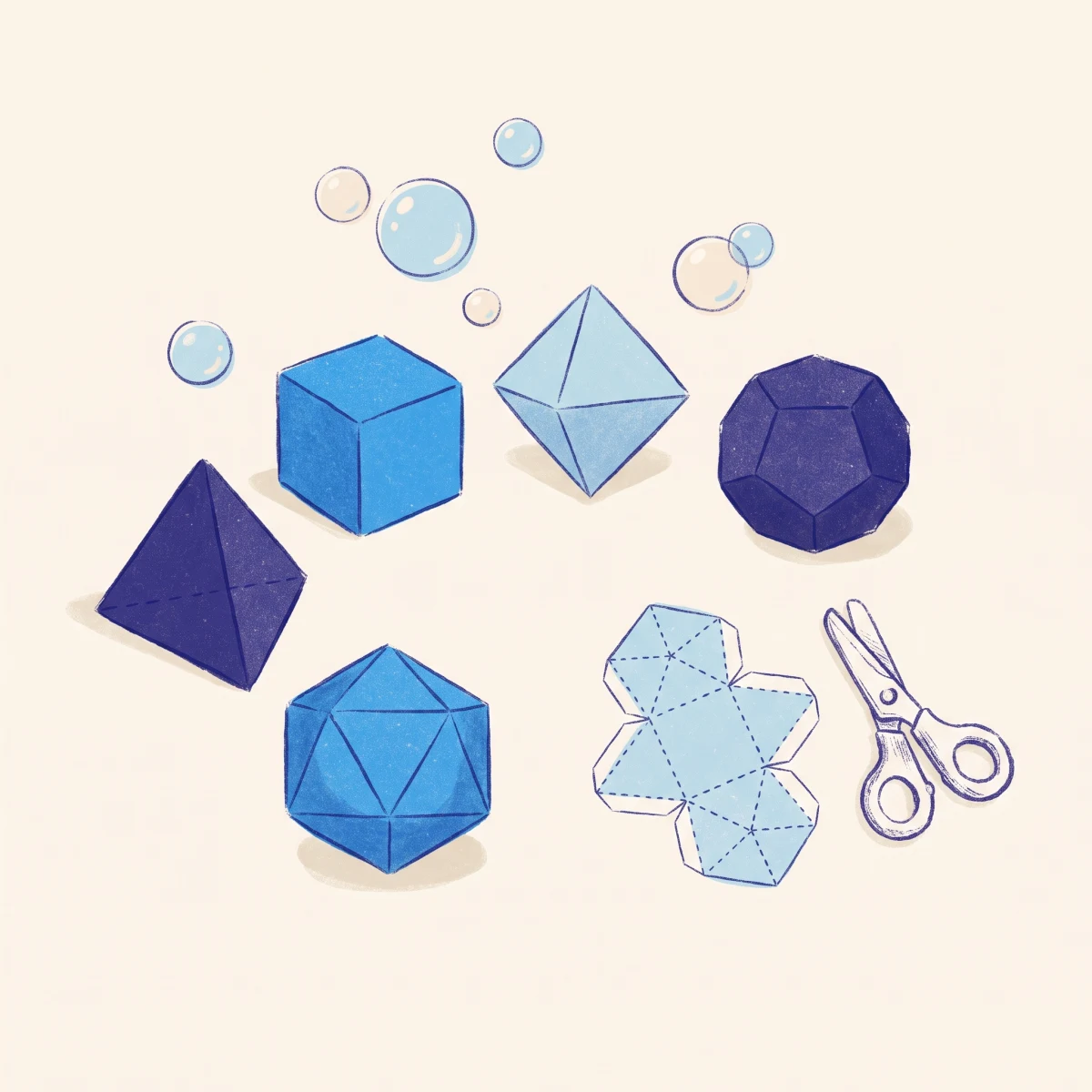
Join the JoyMath list and we'll send you our foldable Platonic solids printable. Five shapes, a pair of scissors, and an afternoon of mathematical wonder.

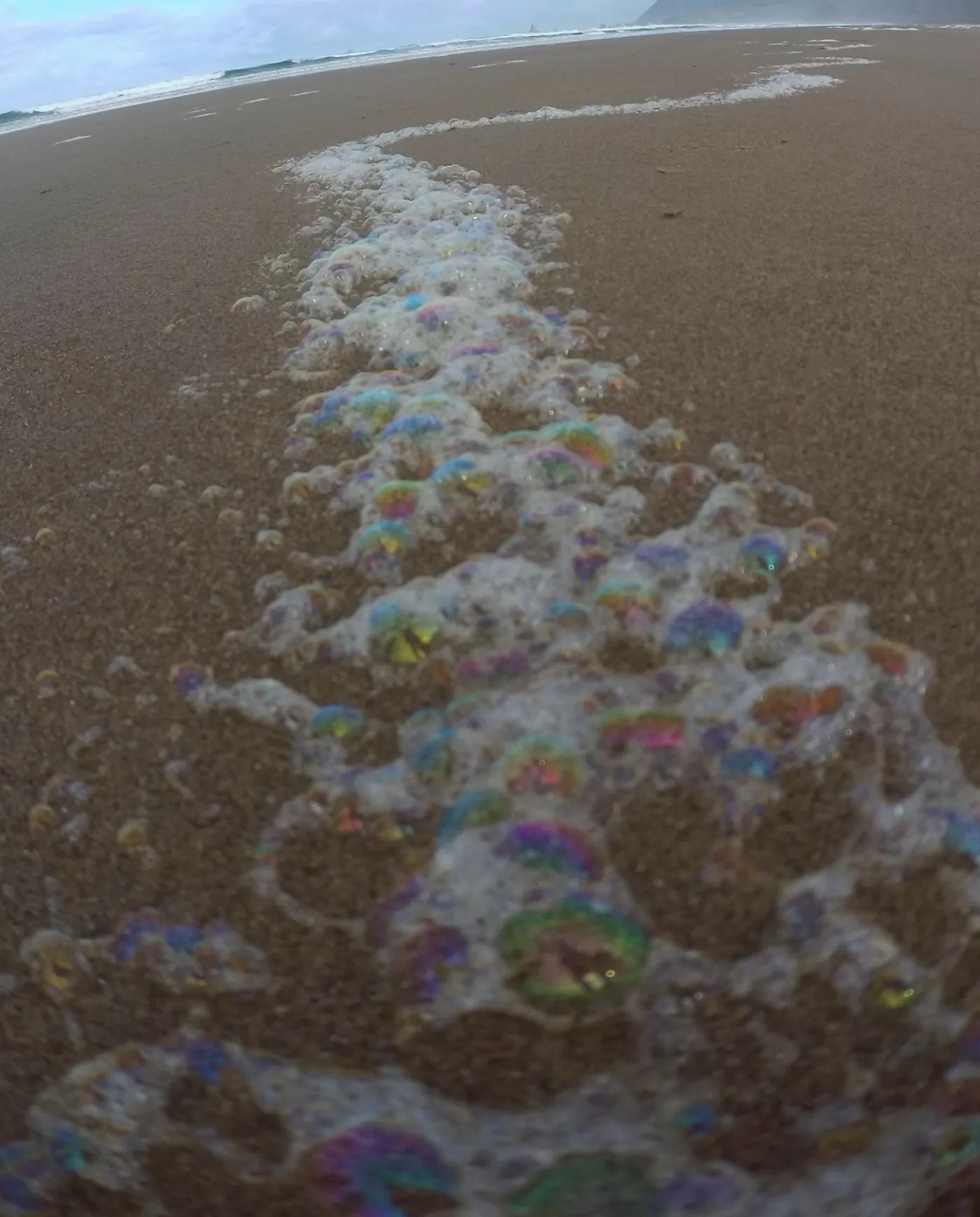
A line of sea foam and iridescent bubbles trailing from the near sand back toward the surf